Just like a disposable camera was never going to replace an SLR in the film days.
Imagine you walk past a newly minted Apple billboard showing in full size, an image taken by the latest iPhone. It looks fantastic, amazing wow you think to yourself. You look down at your dated iPhone (I had the X at the time and while it was deemed vintage by current standards the pics it developed were pretty good) and you think now is a time to update. You go spend up big upgrading a device that objectively you didn’t need to upgrade because unless it was over a decade old or showed signs of heavy wear, it was still fully functional.
Excited, you decide to take it out for a test run. You find subjects and tap away. You do notice that after you take a pic it goes from normal definition to an ultra sharp one. Ok, it must be the in-built software doing its magic, it’s ok you tell yourself.
While these devices offer poor ergonomics and are a little bit cumbersome to the seasoned professional you can deal with it, because so far every pic you have captured looks amazing on the little retina-driven screen. The immediate satisfaction from the vivid images on the retina-driven screen fuels your enthusiasm.
A little later on, you transfer the new images to your laptop to have a better look. Fire up Lightroom or whatever photo editing suite you use and start to go through each image.
You come across a keeper:

Ok, its time to zoom in and see the detail…and you are faced with this horror:

That’s what an iPhone produces.
Admittedly it is the iPhone Plus and not the Pro. Having googled this problem I came across a huge thread in a community forum by a cross of consumer level and pro photographers who were annoyed at how this piece of technology, which was marketed as being the greatest iPhone camera ever produced, rendered such poor images.
Delving into more online forums, you discover a chorus of discontent all over the internet.
The discrepancy between expectation and reality feels akin to someone discovering Photoshop filters for the first time, resulting in an overly stylized image. The image above reminds me of a photo that has been edited in Photoshop by someone who installed Photoshop only a few hours prior and came across the stylized filters for the very first time and just couldn’t help themselves.
This discrepancy raises a poignant question: why are consumers content with subpar image quality when investing in a device that costs as much as an entry-level DSLR? The perplexity deepens as individuals, lured by convenient phone plans, readily embrace each new iPhone release despite potential compromises in photographic excellence.
The quality of the image is not what you pay a lot of money for, the consumer should expect a lot better. iPhones in Australia are the same price as an entry-level DSLR, sometimes 70% more and I continuously see people upgrading to the latest one (being on a phone plan makes it easy but in the end you pay a lot more for the phone) enabling this sort of behavior. And after seeing the results I am left puzzled by why people are ok with such a poor rendering of a photo?
However, it becomes apparent that users who predominantly view their iPhone photos on the device’s retina screen may find the imperfections inconsequential. I have to remind myself that people who use the iPhone to document every detail of their lives will only ever look at these pictures on their devices, on retina screens. To them iPhone pics are ephemeral. It makes sense that the software or AI tricks the user into thinking they have produced an image that would make Ansel Adams blush. I guess it fits into the zeitgeist of the fake era that the world is living through at present, nothing is real because everything is perfect.
When I was a kid there were two types of photographers, consumers, and pros. And they were never interchangeable. A consumer would buy standard supermarket film for their cheap disposable and shoot away picking up their prints and discarding the negatives, from the chemist or cheap lab. While the pro’s would only buy the Tri-X, Kodachrome, et al and produce their film in their darkrooms.
And the companies that produced and made the equipment and films made sure that both sets never crossed over.
Unlike the modern age of marketing manipulation.
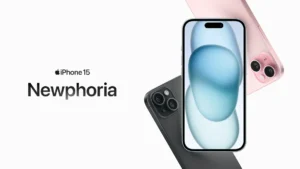
Picture: Apple is really struggling knowing they haven’t innovated with their devices in a few years and have taken to creating a new word to play on people’s emotional addiction to hyper consumerism. And some people actually think this is brilliant marketing. Sigh
Apple is solely responsible for this. In the pursuit of being the first trillion dollar company they have blurred the lines and with dishonest marketing merged both groups into one. And the result is photography as an art form suffers.
While I don’t begrudge the use of smartphones for capturing moments, I refuse to succumb to the manipulation that prompts spending significant sums on a product that falls short. And I will not stand for the attitude that I need to expect this sort of chicanery from the corporate world.
So for now I can go to sleep knowing that an iPhone will never replace a DSLR/mirroless camera. Never, no matter how much Apple tries to tell me otherwise.